
Introduction
Generative AI is a type of artificial intelligence that can create new content such as text, images, or even code by learning from large sets of data. Unlike old computer systems that followed fixed rules, generative AI learns patterns and can produce original material.
For lawyers, this means having a smart assistant that can help draft documents, summarize cases, and analyse judgments within seconds. For example, AI tools like ChatGPT, Google’s Gemini, or legal-specific tools such as Lexis+ AI or Harvey AI can understand plain English and write detailed legal drafts or summaries.
By 2025, generative AI has become a key part of law practice worldwide. A Thomson Reuters survey found that 80% of legal professionals believe AI will have a major impact on their work. Many law firms already use AI to handle research, review documents, and prepare drafts, saving time and improving efficiency.
Understanding Generative AI
Generative AI works by studying millions of examples like contracts, judgments, or legal articles and then generating new text based on what it has learned. When a lawyer asks it to draft an agreement or summarize a case, the AI predicts what information should come next based on previous data.
It’s important to remember that AI doesn’t think like a lawyer. It doesn’t understand law or reason morally. It simply predicts patterns in words and phrases. Still, this prediction ability is powerful for repetitive and time-consuming work.
In legal practice, generative AI can:
- Draft first versions of agreements like NDAs or employment contracts.
- Summarize lengthy judgments or legal opinions.
- Translate legal text into simpler language.
- Prepare checklists or highlight key clauses from documents.
As Indian legal tech experts have noted, AI helps lawyers spend less time on mechanical drafting and more time on complex legal thinking and client advice.
The Evolution of Generative AI in Law
Law has always been a slow adopter of technology. Early AI tools focused only on e-discovery and document review, helping lawyers scan thousands of pages for keywords or evidence. Later, tools like Casetext and ROSS Intelligence used machine learning to speed up legal research.
But true change came with generative AI, which can now write content by itself. Since 2023, AI tools have been able to produce first drafts of contracts or legal memos based on basic inputs. By 2024–2025, big legal tech companies began merging AI with live legal databases. For example, Lexis+ AI and Thomson Reuters CoCounsel can now draft text that is backed by real-time legal information.
Even in India, top firms like AZB & Partners and Shardul Amarchand Mangaldas are adopting AI tools such as Harvey AI for document review and legal drafting. Indian startups like Jhana.ai and DecoverAI are also creating AI-based research and drafting tools for local lawyers.
As one senior partner at AZB put it, AI is not just a tool but a transformative force that allows lawyers to deliver better insights and faster results.
Why Generative AI Matters for Lawyers in 2025
1. Faster Research and Drafting
AI can read thousands of pages of judgments or statutes and produce short, clear summaries in seconds. Lawyers no longer need to spend hours searching through cases. Instead, they can focus on building arguments and strategies.
For example, a lawyer can type a query like “key precedents on breach of contract in India” and instantly receive a list of summarized cases with references.
2. Automating Routine Work
Many legal tasks like filling forms, creating standard contracts, or checking clauses are repetitive. AI can automate these steps and create documents based on templates.
For instance, it can prepare an NDA just by adding party names and dates. This saves time for lawyers and reduces human error.
3. Better Client Service
Clients expect faster and simpler answers. Law firms now use AI chatbots to handle basic questions, share required document lists, or explain simple legal terms.
These chatbots can operate 24/7, ensuring quick client responses while lawyers focus on more complex matters. This levels the field for small firms and solo practitioners who can now serve more clients efficiently.
4. Predictive Legal Insights
Generative AI tools can study thousands of past cases to predict likely outcomes. For example, tools like Lex Machina use data from previous judgments to estimate the chances of winning a case. This helps lawyers and clients make better strategic decisions—like whether to settle or go to trial. Such predictions can also guide corporates in budgeting and managing legal risks.
5. Accessibility and Competition
AI makes advanced tools available to everyone. Earlier, only large firms could afford expensive legal databases. Now, even small firms or independent lawyers can use affordable AI tools like ChatGPT or Harvey AI. This increases competition and improves access to quality legal services. However, firms that ignore AI may struggle to keep up in terms of speed and pricing.
Ethical and Professional Challenges
While AI offers many benefits, it also raises serious concerns:
- Confidentiality & Data Privacy:
Lawyers must protect client data. India’s Digital Personal Data Protection Act, 2023 (DPDP Act) sets strict rules for using personal information. Law firms must ensure any AI tool they use complies with these laws and stores data securely. - Accuracy Issues (“Hallucinations”):
Sometimes, AI can produce wrong or fake information, such as citing a non-existent case. Lawyers must always verify AI outputs and treat them as drafts, not final documents. - Accountability:
If AI gives wrong advice, the lawyer, not the tool, is responsible. So, every AI-generated draft must be reviewed by a human before sharing with clients. - Bias and Fairness:
AI systems learn from old data, which can contain bias. This means AI can unintentionally repeat unfair judgments or language. Lawyers should review outputs carefully, especially in sensitive cases. - Professional Integrity:
Ethical rules still apply in the AI era. Lawyers must understand the limits of technology and not rely blindly on it. The Bar Council of India may soon issue clear guidelines on the professional use of AI.
Preparing for the AI-Driven Future
To make the most of generative AI, lawyers should:
- Learn and Upskill:
Understand how AI works and how to use it responsibly. Law colleges and bar associations in India have already started AI workshops. You can also join Bettering Results’ 3-Month Certificate Program on Generative AI for Legal Professionals to gain practical, hands-on learning. - Integrate AI into Workflows:
Use AI for first drafts, research, or client intake. Always follow it with human review. - Build AI Governance Policies:
Create firm-level rules for AI use, covering client consent, data privacy, and accuracy checks. - Collaborate with Tech Experts:
Law firms can partner with software developers to build tools suited for Indian laws and court systems. - Focus on Human Skills:
AI cannot replace empathy, ethics, or judgment. Lawyers should strengthen soft skills like communication, negotiation, and critical thinking.
Conclusion
Generative AI is reshaping the legal world. It is not here to replace lawyers but to empower them. Lawyers who learn to use AI smartly will deliver faster, more accurate, and cost-effective services.
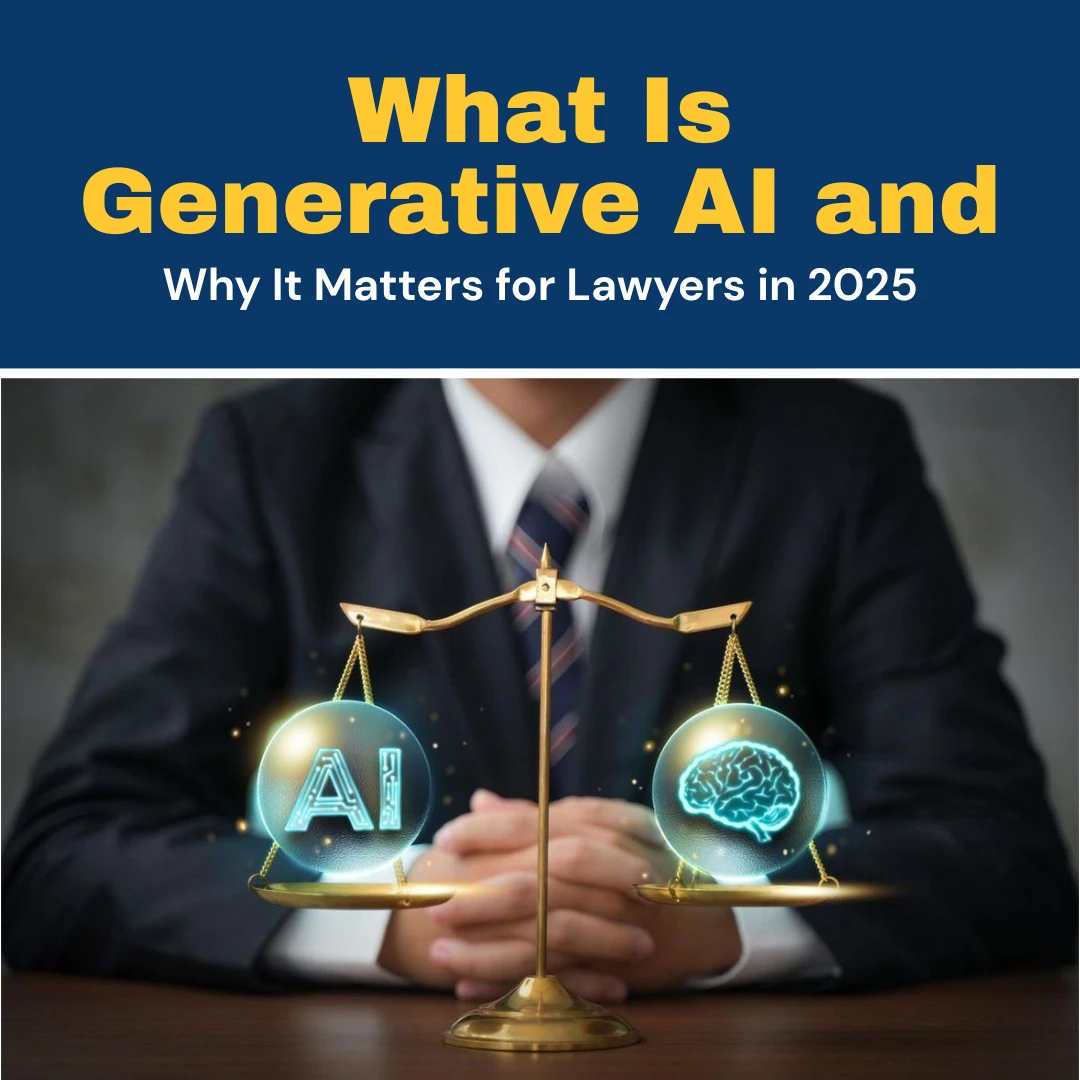
However, technology must go hand in hand with ethics. Lawyers must safeguard client confidentiality, verify every output, and stay accountable. The future is not “man versus machine” but “man with machine.” By combining human judgment with AI’s speed and intelligence, the legal profession can become more efficient and accessible.
In 2025 and beyond, lawyers who embrace AI will lead the way in creating a more modern, fair, and tech-enabled legal system.